Quick answer: For a promotional products distributor, offering Japanese merchandise is a differentiation play — and it works because the merch reflects on your client's brand. Most promo product is commodity swag that gets tossed; a distinctive, quality Japanese item gets kept, which is what turns spend into recall. The promo reality is per-campaign and no-inventory: you source to each client's brief on demand, so the move is to reach a broad, distinctive Japanese selection through one source, curate kept-worthy items to the brief, nail the campaign date despite cross-border lead times, and and price on a real landed-cost model that includes freight, duties, and clearance. This playbook walks through it.
Key takeaways
- Promo merch reflects on your client's brand — 72% of people judge a company's reputation by the quality of the promotional product it gives. A forgettable commodity item is a liability; a distinctive, quality one is an asset.
- Distinctive, kept-worthy items are the whole game. Promotional products earn their recall — 90% remember the brand — when they're good enough to keep, not tossed. Japanese craft products are built to be kept.
- Promo is a per-campaign, no-inventory business. The edge is sourcing something distinctive to each client's brief on demand — not stocking the same logo pen everyone else offers.
- Campaign timing is non-negotiable. Merch tied to an event date that lands late is wasted spend; cross-border lead time is where that risk lives.
- Don't build an import operation to offer this. One source that carries the breadth and arranges the shipping lets you add a distinctive Japanese line to your catalog campaign by campaign.
The situation: the merch reflects your client, and most of it gets tossed
Promotional products work — that's not in question. 90% of people who receive one remember the brand, and 89% can recall it two years later. (Promotional Products Statistics, SellersCommerce) The US industry runs to roughly $19.8 billion, so the spend is real. (Promotional Products in the US, IBISWorld)
But there's a catch your clients feel: 72% of people believe the quality of a promotional product is directly tied to the reputation of the company that gave it. (SellersCommerce) That cuts both ways. A cheap item that's tossed doesn't just fail to land — it quietly tells the recipient something unflattering about your client. A distinctive, quality item that gets kept does the opposite. So the distributors who win repeat business are the ones who can offer clients merch that reflects well on them — and that's hard when the catalog is the same commodity swag everyone else sells.
This is a practical playbook for adding distinctive Japanese merchandise to that catalog without it becoming a sourcing project. It assumes you run a real promo business — client briefs, per-campaign sourcing, decoration, deadlines — and works inside that reality. For the supply-side map, our guide to sourcing Japanese products wholesale in the US covers the routes; this piece is about doing it for campaigns.
① Why Japanese products make strong promotional merchandise
Three reasons, and they line up with what makes promo actually work.
They get kept. Recall comes from retention — an item good enough to keep keeps working. Japanese craft products — a quality pen, a ceramic cup, a well-made tote or stationery set — are built to be used, not binned, which is exactly the retention that drives recall. (SellersCommerce)
They reflect well on the client. Since recipients judge the giver by the merch, a tasteful, well-made Japanese item signals care and quality — the opposite of the disposable-swag impression that 72% stat warns about.
They're distinctive, and demand is there. A Japanese item stands out in a sea of logo pens, and Japanese product has strong, current US pull — Japan's food and agricultural exports hit a record ¥1.70 trillion in 2025 with the US the top destination, up 13.7%. (Nippon.com / MAFF data) It reads as a considered choice, not a default one.
② The playbook
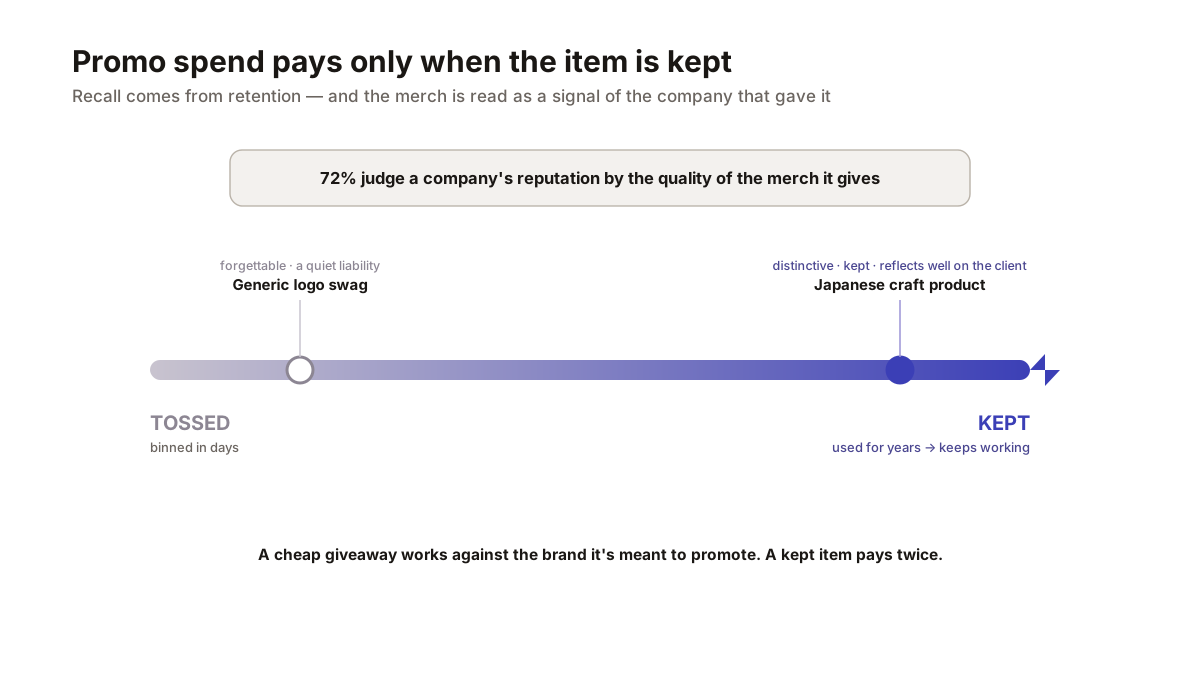
Promotional spend converts to recall only when the item is kept. Japanese craft products live at the 'kept' end of the spectrum.
Step 1 — Start from the client's brand and brief
Don't start from a product catalog; start from what the merch should say about your client. For each campaign, pin down the brand impression the client wants (premium, thoughtful, design-forward), the audience, the occasion, and the budget per recipient. That brief tells you which Japanese items fit — a brand selling craft and care wants a different item than one selling speed — and keeps you choosing on fit rather than on what's easy to source.
Step 2 — Curate kept-worthy items, not commodity
The instinct under deadline is to reach for the cheap, easy-to-decorate item. Resist it for the campaigns that matter. Curate a tight set of genuinely kept-worthy Japanese products matched to the brief — items the recipient will actually use, which is what makes the merch keep paying off. A note on decoration: heavy logo-stamping can undercut the premium that makes these items work, so lean toward tasteful co-branding or a clean enclosure card with the maker's story rather than plastering a logo across craft product.
Step 3 — Source per campaign, with no standing inventory
Promo is a no-inventory business: you source to each brief on demand, so you don't want to pre-stock a Japanese line and carry the risk. The move is to reach a broad Japanese selection through a source you can draw from per campaign — pull what each brief needs, when it needs it — rather than committing inventory or onboarding makers for a one-off. Your catalog gains a distinctive line without your balance sheet gaining stock.
Step 4 — Protect the campaign date
This is the step promo can't afford to miss. Merch is tied to an event — a launch, a conference, a client milestone — and an item that arrives after it is wasted spend, full stop. The timing risk lives in cross-border lead time, so confirm the landed delivery window before you commit a Japanese item to a dated campaign, and source from a partner that can commit to it. Treat the date as a hard constraint, and quote your client timing you can hold.
Step 5 — Model landed cost against the per-recipient budget
Campaign budgets are fixed per recipient, so a cost surprise blows the margin. Model the full landed cost up front. Under the 2025 US–Japan framework, most Japanese consumer goods land at roughly 15%, inclusive of the MFN rate rather than added to it, with the exact figure set by each item's HTS classification — so it varies by product, and a few categories sit higher. Duties are ad valorem, so the rate holds at any quantity. (Congressional Research Service, Federal Register notice) Whether you owe duties directly depends on your route; our customs, duties, and logistics walkthrough shows how to build the per-unit landed figure your campaign quote rests on.
Step 6 — Present, then build the repeat
Promo is a repeat-relationship business. Present the Japanese option with the maker's story — it gives your client a reason-to-choose and their recipients a reason-to-keep — and after the campaign, capture what you can on response and retention. A campaign whose merch got kept and reflected well on the client is the one that earns the next brief. Feed what worked into your next curation, and let the distinctive line become a reason clients come back to you specifically.
③ Three common ways this goes wrong
Do this
- Curate distinctive, kept-worthy Japanese items matched to the client's brand and brief.
- Source per campaign through a no-inventory source, and confirm the landed delivery window before committing to a dated campaign.
- Lean on tasteful co-branding and the maker's story rather than heavy logo-stamping that undercuts the premium.
Avoid this
- Defaulting to commodity swag with a logo. It gets tossed, and since recipients judge the client by the merch, a cheap item reflects badly on the very brand it's meant to promote.
- Missing the campaign date. Merch that lands after the event is wasted spend. Plan around cross-border lead times and don't promise dates you can't hold.
- Treating 'Japan' as a theme rather than choosing genuinely good items. A cherry-blossom-printed giveaway is a costume; a quality item that gets used is the point.
The first failure mode is the one with a hidden cost. A forgettable giveaway doesn't just underperform — because 72% read the merch as a signal of the giver's quality, a cheap item actively works against your client's brand. The distinctive, kept item is the only kind that makes the spend pay twice: once in recall, once in the impression it leaves of the company behind it.
orosy — the Buyer Portal
If you'd rather curate distinctive merch than build an import operation, this is the gap orosy is built to fill. The name comes from the Japanese word orosu (卸す), "to wholesale." Founded in 2018, orosy connects buyers to a wide breadth of Japanese supply — 5,000+ Japanese brands and suppliers, about 200,000 products, and 20,000+ buyers — so you can curate a distinctive Japanese option for each campaign from nearly the full range of what Japan makes, drawing on it per brief rather than carrying inventory or signing a contract per maker, and orosy arranges the international shipping to your country. You do not need a forwarder or a receiving point in Japan.
Campaign dates make the cost and clearance picture worth stating plainly. Before you order, the cart shows a reference figure for international shipping, for your information only. The actual shipping cost is calculated later and billed to you, and it can differ from that figure. Customs clearance in your country, import duties, and taxes at import are your responsibility. They are not part of the cost billed by orosy. Put clearance into the campaign calendar and both costs into the per-recipient budget before you commit to a date.
FAQ
Why use Japanese products as promotional merchandise?
Because they get kept and reflect well on the client. Recall comes from retention, and Japanese craft products are built to be used rather than tossed. Since 72% of people judge a company's reputation by the quality of its promotional product, a distinctive, well-made Japanese item works twice — driving recall and leaving a quality impression of the brand behind it — where commodity swag does neither.
Can I order Japanese promo products per campaign without holding inventory?
That's the right way to do it. Promo is a no-inventory, per-campaign business, so you want a source you can draw from to each brief on demand rather than pre-stocking a Japanese line or onboarding makers for a one-off. The aim is to add a distinctive line to your catalog without putting stock on your balance sheet.
Can Japanese promotional products be branded with a logo?
Tastefully, yes — but go light. Heavy logo-stamping undercuts the premium that makes these items get kept, which is the whole reason to use them. Lean toward subtle co-branding or a clean enclosure card carrying the maker's story, so the item still reads as a quality gift rather than disposable swag.
How do I make sure Japanese promo merch arrives in time for a campaign?
Treat the date as a hard constraint and confirm the landed delivery window before committing a Japanese item to a dated campaign. The timing risk is in cross-border lead time, so source from a partner that can commit to the window, plan around it, and quote your client only timing you can hold — because merch that lands after the event is wasted spend.
How does orosy fit a promotional products distributor?
As the supply layer for a distinctive line. orosy connects you to a broad breadth of Japanese supply — 5,000+ brands and about 200,000 products — that you can curate per campaign without holding inventory or signing a contract per maker, and arranges the international shipping. Before you order, the cart shows a reference figure for international shipping, for your information only. The actual shipping cost is calculated later and billed to you, and it can differ from that figure. Customs clearance, import duties, and taxes at import are yours, and are not part of what orosy bills. Clearance time belongs in the campaign calendar. You keep the client relationship, the brief, and the decoration; orosy provides the distinctive Japanese product, the supplier relationships behind it, and the shipping arrangement.
Sources
- Promotional Products Statistics (90% brand recall, 72% quality–reputation link), SellersCommerce: https://www.sellerscommerce.com/blog/promotional-products-statistics/
- Promotional Products in the US — Industry Market Size, IBISWorld: https://www.ibisworld.com/united-states/industry/promotional-products/1440/
- Japan's Food Exports Rise to ¥1.7 Trillion in 2025 (US top destination, +13.7%), Nippon.com (MAFF data): https://www.nippon.com/en/japan-data/h02696/
- US Tariffs and the 2025 US–Japan Framework Agreement, Congressional Research Service: https://www.congress.gov/crs-product/IN12608
- Implementing Certain Tariff-Related Elements of the United States–Japan Agreement, Federal Register: https://www.federalregister.gov/documents/2025/09/16/2025-17908/implementing-certain-tariff-related-elements-of-the-united-states-japan-agreement