Quick answer: Flxpoint is a strong enterprise platform for running a multichannel dropship and inventory operation — it routes orders to the best supplier or warehouse, prevents overselling with real-time inventory sync, and manages listings across channels, with 180+ pre-built vendor connectors. But it's an operations hub, not a supply source: it manages and routes the vendors you've already onboarded; it doesn't carry a catalog of products to buy, Japanese or otherwise. If your goal is Japanese product on your shelf, the unsolved problem is upstream — in where the supply comes from. This guide explains the difference, when an operations platform is the right tool, and how a supply source and an operations hub sit in the same stack.
Key takeaways
- Flxpoint is a capable operations hub: it unifies inventory, routes orders to the right supplier or warehouse, and syncs listings across channels — across many vendors at once. This isn't a knock on it.
- It manages the suppliers you bring — it isn't one of them. Flxpoint connects warehouses, 3PLs, and dropship vendors you've already onboarded; there's no Japanese catalog to buy from inside it.
- Think of it as a control tower: it routes the planes efficiently, but it doesn't build them. If you have no Japanese supplier, an operations hub has nothing Japanese to route.
- So for Japanese product, the unsolved problem is upstream: where does the supply come from? That's sourcing direct from Japan, or a handled model.
- They fit together, not against each other — a large retailer could source Japanese product through orosy and run its multichannel operations through a platform like Flxpoint.
Start here: Flxpoint is a strong operations hub
If you're a mid-market or enterprise retailer juggling many suppliers, warehouses, and sales channels, Flxpoint solves a real and painful problem. It unifies inventory across every source, routes each order to the best supplier or warehouse automatically, prevents overselling with real-time sync, and keeps product listings consistent across channels — connecting warehouses, 3PLs, POS, and dropship vendors through 180+ pre-built connectors plus EDI, API, and FTP. (Flxpoint — how it works, Flxpoint — dropship & marketplace)
It's priced as the enterprise tool it is: plans start around $499/month (Business, billed annually) and $999/month (Pro), with onboarding packages around $5,000. (Flxpoint pricing, Flxpoint review, EcommerceCEO)
So this isn't a "Flxpoint is bad" piece — for a complex multichannel operation it's genuinely valuable. The confusion for a buyer chasing Japanese product is that an operations hub looks like it might also be a place to find product. It isn't.
If you want the supply-side map this article keeps pointing to, see our guide on how to source Japanese products wholesale in the US.
What Flxpoint does well
Give it its due — for the right operation, these strengths are real.
What it's great at
- Inventory unification: real-time sync across many suppliers and warehouses, so you don't oversell or stock out.
- Smart order routing: each order goes to the best source or warehouse automatically — by speed, cost, or accuracy.
- Listing management: centralized product data and pricing kept consistent across every sales channel.
- Broad connectivity: 180+ vendor connectors plus EDI/API/FTP to onboard the partners you have.
What it is not
- It is not a product catalog. There's no set of makers to browse and buy from inside Flxpoint — you connect vendors you've already secured.
- It is not a sourcing service. It won't find Japanese suppliers, negotiate, or handle customs and freight; that's upstream of an operations platform.
That second column is the category boundary, not a flaw. Flxpoint is built to operate a supplier base efficiently — which only helps once that base exists.
The control-tower problem
A control tower is indispensable: it sequences and routes every aircraft safely and efficiently. But it doesn't build aircraft, and it can't route a plane that was never in the air. Flxpoint is that control tower for your supply operation — it routes and syncs brilliantly, but it can only route suppliers you've already brought into the system.
For Japanese product, that's the whole catch. The hard part isn't routing or inventory sync — it's that there's no Japanese supplier in your hangar to begin with. Finding, qualifying, and contracting a Japanese source, and handling the customs and freight to land its goods, is the actual work, and it sits below the operations layer.
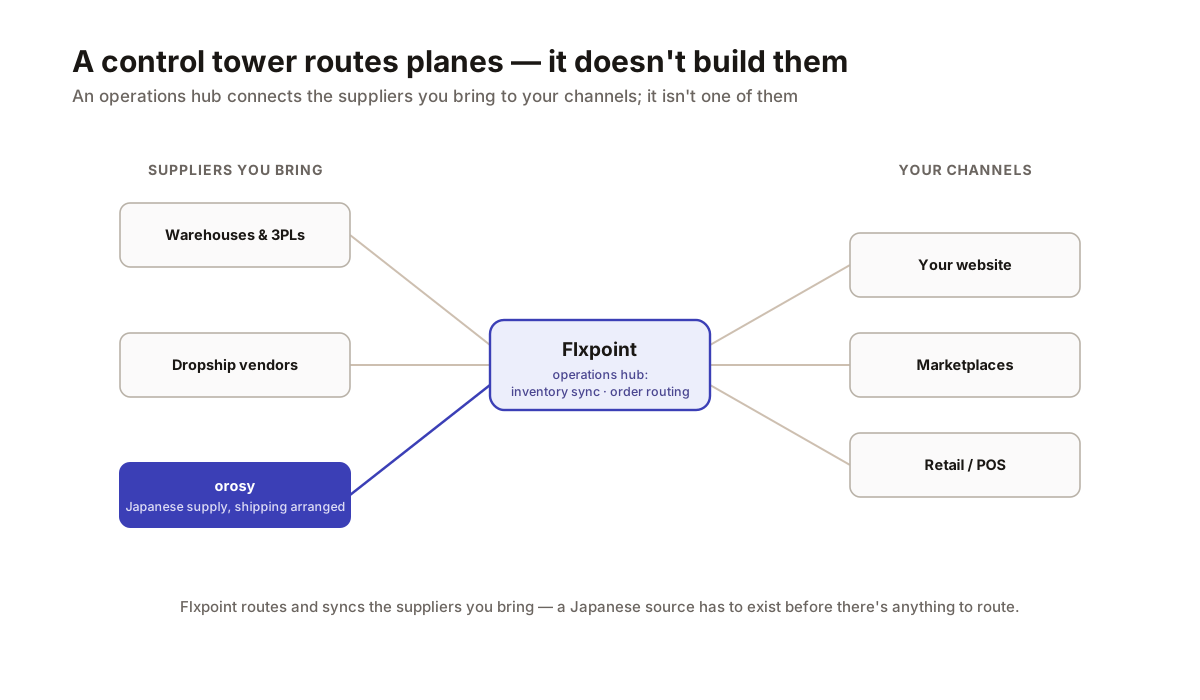
Flxpoint routes between the suppliers you bring and your channels. A Japanese supply source has to exist before there's anything Japanese to route.
What this means if you want Japanese product
If the goal is Japanese product on your shelf, an operations hub doesn't move you forward by itself:
- The bottleneck is supply, not operations. Flxpoint can sync and route a Japanese supplier beautifully — once you have one. Securing that supplier and landing its goods across the border is the unsolved part, and it's upstream.
- Operations value kicks in later. If you run a complex multichannel business, a platform like Flxpoint is a great place to operationalize a Japanese source you've secured. That's the complementary case, not a competing one.
So the real comparison for Japanese product is in the supply layer: source direct from Japan, or use a handled model.
Operations hub vs. supply source: where each fits
| Flxpoint (operations) | Source direct from Japan | Handled sourcing model | |
|---|---|---|---|
| What it is | Inventory & order ops across your suppliers/channels | You reaching Japanese suppliers yourself | A supply source that has contracted Japanese suppliers and arranges shipping |
| Provides products? | No — manages vendors you bring | Yes — Japan's supply base, if you can reach it | Yes — a broad breadth of Japanese supply |
| Who arranges shipping? | No — it routes orders, not imports | No — entirely yours as importer | orosy arranges shipping; duties & clearance stay yours |
| Where it sits | Operations layer (above supply) | Supply layer | Supply layer |
| Best used for | Running a multichannel, multi-supplier operation | High-volume buyers with import staff & time | Buyers who want Japan's breadth, handled |
| Works with the others? | Yes — operates any supply you've secured | Can be operated inside a hub like Flxpoint | Can be operated inside a hub like Flxpoint |
The honest takeaway mirrors any operations tool: Flxpoint isn't an alternative to a Japanese supply source — it's the layer that runs your operation once the supply exists. Great control tower; it still needs planes.
When Flxpoint is the right call (and we mean it)
For the right operation, Flxpoint is an excellent choice. Reach for it when:
- You run many suppliers and channels at once. If overselling, routing, and listing sync are your pain, that's its core job.
- You need real-time inventory across sources. Warehouses, 3PLs, and dropship vendors unified in one view.
- You already have your suppliers. Operations automation pays off once the supply relationships exist.
Reach for a supply source (direct or handled) instead — or first — when the unsolved problem is finding and importing the product itself, which is the case for almost anyone adding Japanese product.
Where orosy fits
orosy sits in the supply layer, not the operations layer — and it's built around Japanese supply specifically. The name comes from the Japanese word orosu (卸す), "to wholesale."
orosy connects overseas buyers to a wide breadth of Japanese supply — 5,000+ Japanese brands and suppliers, about 200,000 products, and 20,000+ buyers, with the company founded in 2018 and now an equity-method affiliate of giftee Inc. (Tokyo Stock Exchange Prime: 4449). You pick what fits your shelf, orosy carries the negotiations and account opening with each supplier, and orosy arranges the international shipping to your country. You do not need a forwarder or a receiving point in Japan. Before you order, the cart shows a reference figure for international shipping, for your information only. The actual shipping cost is calculated later and billed to you, and it can differ from that figure.
And orosy and an operations hub aren't competitors. A large retailer could secure Japanese supply through orosy and then run inventory and order routing inside a platform like Flxpoint. orosy answers "where does the Japanese product come from, who holds the supplier relationships, and who arranges the shipping"; an operations hub answers "how do I run a multichannel operation once I have suppliers." Different questions, different layers.
FAQ
Can I source Japanese products through Flxpoint?
No. Flxpoint is a multichannel dropship and inventory operations platform — it routes orders and syncs inventory across the suppliers and warehouses you've already onboarded. It doesn't carry a catalog of suppliers to buy from, so there's no Japanese supply to source inside it. You'd secure a Japanese source separately and could then operate it through Flxpoint.
Does Flxpoint supply products or just manage them?
It manages them. Flxpoint connects warehouses, 3PLs, and dropship vendors you bring, then unifies inventory, routes orders, and syncs listings across channels. The products and suppliers are yours to secure; Flxpoint is the operations layer that runs them efficiently.
Is Flxpoint a good platform?
For its purpose, yes — it's a strong enterprise operations hub for complex multichannel and multi-supplier businesses, with real-time inventory, smart order routing, listing management, and 180+ vendor connectors. The limitation for this article's reader is category, not quality: it's operations infrastructure, not a Japanese supply source.
Could I use orosy and Flxpoint together?
Yes — they're complementary. orosy is a supply source for Japanese product that carries the supplier relationships and arranges the shipping; Flxpoint operates inventory and order routing once you have suppliers. A large multichannel retailer could reasonably use both: orosy for the Japanese supply, Flxpoint to run the operation.
How is orosy different from Flxpoint?
They sit in different layers. orosy is a Japanese wholesale supply source — 5,000+ brands and about 200,000 products — that carries the negotiation and account opening with each supplier, consolidates a multi-supplier order into one cart and one invoice, and arranges the international shipping. Before you order, the cart shows a reference figure for international shipping, for your information only. The actual shipping cost is calculated later and billed to you, and it can differ from that figure. Customs clearance, import duties, and taxes at import are yours, and are not part of what orosy bills. Flxpoint is an operations hub that routes orders and syncs inventory across suppliers you already have. One provides the product, the supplier relationships, and the shipping arrangement; the other runs the operation.
Sources
- Flxpoint — how it works (inventory, order routing, listing management): https://flxpoint.com/how-it-works
- Flxpoint — dropship & marketplace solutions (vendor connectors, EDI/API/FTP): https://flxpoint.com/dropship-marketplace
- Flxpoint — pricing (Business/Pro tiers, onboarding): https://flxpoint.com/pricing
- Flxpoint review (independent overview), EcommerceCEO: https://www.ecommerceceo.com/reviews/flxpoint/